
Why Tubing Size Matters in Bioprocessing: Understanding ID and OD
Introduction
Selecting the right tubing is essential for maintaining reliable and efficient bioprocessing operations. While material compatibility is an important consideration, tubing size also plays a significant role in system performance.
Two key measurements, inner diameter (ID) and outer diameter (OD), influence fluid flow, pressure requirements, equipment compatibility, and overall process efficiency.
Incorrect tubing dimensions can contribute to excessive pressure drop, inconsistent flow, unnecessary hold-up volume, or connection issues. Understanding how ID and OD affect system performance helps manufacturers make informed decisions when designing single-use assemblies and fluid transfer systems.
At BioProcess Supplies (BPSSU), we work closely with customers to identify tubing configurations that meet their specific process and application requirements.
Why Tubing Size Matters in Bioprocessing
Tubing serves as a critical connection between components in bioprocessing systems. Its dimensions can affect how efficiently fluids move through an assembly and how well the tubing integrates with pumps, connectors, and other equipment.
Proper tubing sizing helps support:
Consistent fluid flow: Maintaining the required flow rate throughout the process.
Pressure management: Reducing unnecessary flow resistance and excessive pressure drop.
Connection integrity: Ensuring tubing fits securely with compatible fittings and components.
Process efficiency: Minimizing unnecessary hold-up volume and product loss.
Reliable performance: Supporting repeatable operation across different process stages.
Even small differences in tubing dimensions can affect performance, particularly in applications that require controlled fluid delivery.
Understanding Tubing ID vs. OD
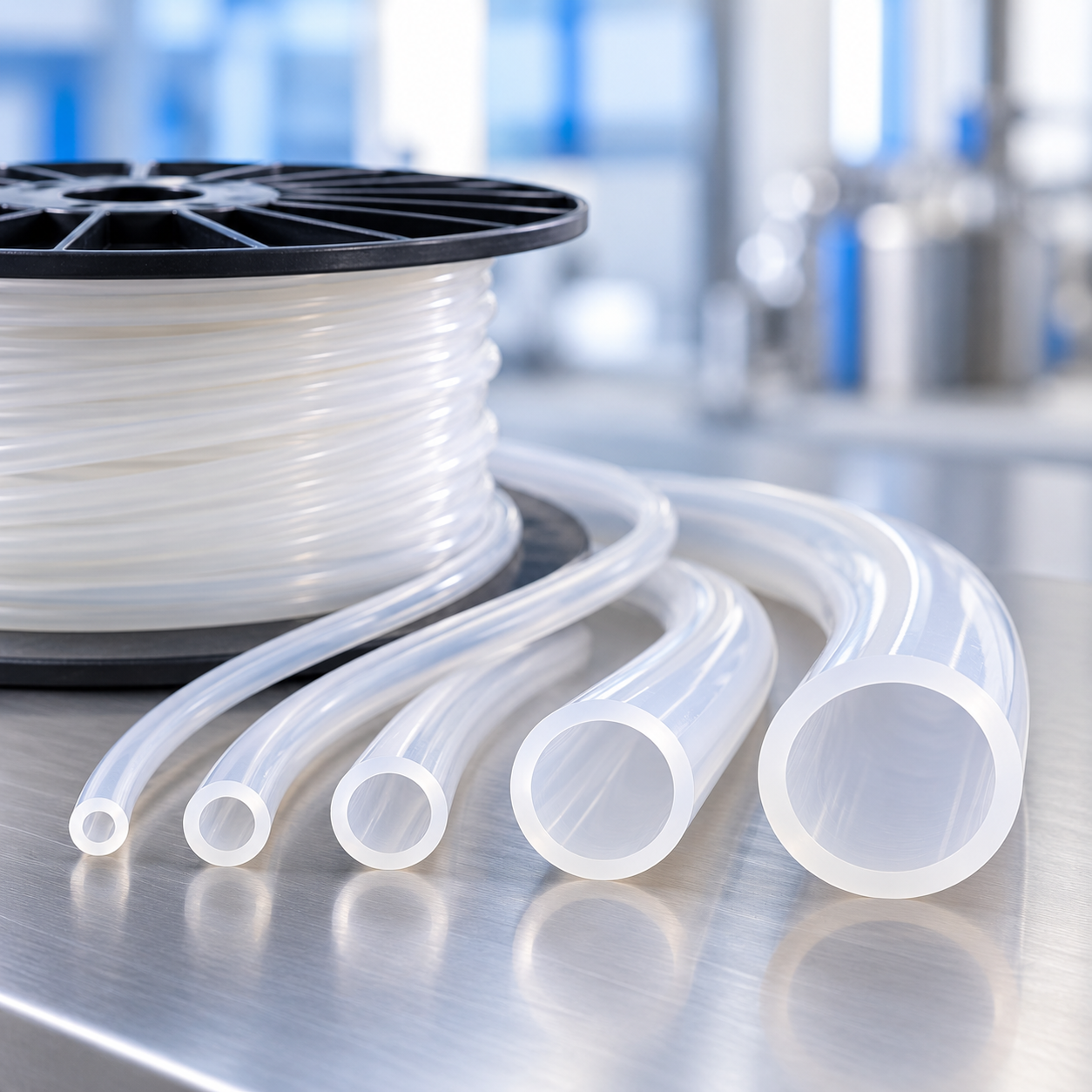
Inner diameter and outer diameter describe different dimensions of tubing. Both must be considered when selecting tubing for a bioprocess application.
What Is Inner Diameter (ID)?
Inner diameter refers to the measurement across the inside of the tubing, where fluid flows.
ID plays an important role in determining fluid velocity, pressure drop, and the volume of fluid held within the tubing.
For a given flow rate, smaller inner diameters generally result in higher fluid velocity and greater resistance to flow. Larger inner diameters can reduce pressure drop but also increase the amount of fluid contained within the tubing.
Selecting the appropriate ID helps balance flow requirements, pressure limitations, and process efficiency.
What Is Outer Diameter (OD)?
Outer diameter refers to the measurement across the outside of the tubing.
OD is especially important when determining compatibility with equipment that grips, compresses, or supports the outside of the tubing.
For example, some pump heads and compression fittings require specific tubing dimensions to function correctly.
However, connection requirements vary by fitting type. Barbed connectors typically depend on the tubing’s inner diameter, while other fittings may rely on its outer diameter.
Why Wall Thickness Matters
Wall thickness is another important factor in tubing selection.
It is calculated using the difference between outer diameter and inner diameter:
Wall Thickness = (OD − ID) ÷ 2
Wall thickness influences tubing flexibility, pressure resistance, and performance in certain pumping applications.
Together, ID, OD, and wall thickness determine whether tubing is suitable for a particular fluid transfer system.
Key Factors to Consider When Selecting Tubing Size
Choosing the right tubing dimensions requires evaluating several application-specific factors.
1. Flow Rate Requirements
Tubing ID should support the desired flow rate without creating excessive fluid velocity or unnecessary pressure drop.
The appropriate diameter depends on the fluid properties, system configuration, and pumping method.
2. Operating Pressure
Tubing must withstand the pressure conditions expected during operation.
Material properties, wall thickness, temperature, and manufacturer specifications all influence pressure capabilities.
3. Pump and Connection Compatibility
Tubing dimensions must align with the requirements of pumps, fittings, connectors, and other assembly components.
Incorrect sizing can contribute to leaks, inconsistent pumping performance, or premature tubing wear.
4. Fluid Characteristics
Fluid viscosity, temperature, and chemical composition can influence tubing performance.
Material compatibility should always be evaluated alongside dimensional requirements.
5. Hold-Up Volume
Larger tubing diameters contain more fluid over the same length.
In applications involving valuable media or small process volumes, excessive hold-up volume may contribute to unnecessary product loss.
Considering these factors together helps support a more efficient and reliable fluid transfer system.
Small vs. Large Diameter Tubing: Understanding the Differences
Neither smaller nor larger tubing is automatically the better choice. Each offers advantages depending on the application.
Smaller Diameter Tubing
Smaller tubing may be suitable for applications involving lower flow rates or limited fluid volumes.
Potential advantages:
Lower internal volume
Reduced fluid hold-up
Suitable for certain low-volume transfer applications
Considerations:
Greater pressure drop at the same flow rate
Higher fluid velocity at a given volumetric flow rate
Increased sensitivity to restrictions or particulate buildup
Larger Diameter Tubing
Larger tubing is often considered when higher flow rates or reduced flow resistance are priorities.
Potential advantages:
Lower pressure drop at the same flow rate
Greater capacity for high-volume fluid transfer
Lower fluid velocity at a given volumetric flow rate
Considerations:
Increased internal volume
Potentially greater product hold-up
Additional compatibility requirements for pumps and fittings
The best tubing size depends on the overall system design rather than diameter alone.
Tubing Size Considerations for Common Bioprocessing Applications
Different bioprocessing applications place different demands on fluid transfer systems.
Cell Culture
Cell culture applications may involve shear-sensitive fluids or biological materials.
Tubing selection should account for flow rate, fluid velocity, and the potential for excessive shear stress. Choosing appropriate dimensions helps support controlled fluid transfer while protecting process integrity.
Fermentation
Fermentation processes often require dependable movement of media, nutrients, and process fluids.
Tubing size should accommodate the required transfer volumes while considering operating pressure, fluid characteristics, and equipment compatibility.
Chromatography
Chromatography systems may require precise control over fluid delivery and careful management of system volume.
Appropriate tubing dimensions help minimize unnecessary hold-up volume and pressure losses while supporting consistent flow through the system.
Filtration
Filtration applications require tubing configurations that support the desired flow rates and operating pressures.
Proper sizing is especially important when working with pumps, filtration components, and interconnected fluid transfer assemblies.
Bioreactor Systems
Bioreactor assemblies may include multiple tubing lines for media addition, sampling, gas transfer, and fluid removal.
Each line may require a different tubing configuration based on its function, flow requirements, and connection points.
Selecting tubing sizes for each individual operation helps support efficient system integration.
Best Practices for Optimizing Tubing Size
A well-designed fluid transfer system considers tubing dimensions throughout the entire assembly.
The following practices can help improve tubing selection:
- Identify process requirements. Determine the desired flow rate, operating pressure, and fluid characteristics before selecting tubing.
- Evaluate the complete flow path. Consider the impact of tubing lengths, bends, connectors, and other components on overall system performance.
- Minimize unnecessary hold-up volume. Select dimensions that accommodate process requirements without introducing excessive internal volume.
- Verify component compatibility. Confirm that tubing dimensions meet the specifications of pumps, connectors, and fittings.
- Review material and operating limitations. Evaluate chemical compatibility, temperature, pressure ratings, and manufacturer recommendations.
- Validate performance when necessary. Test the proposed tubing configuration under representative operating conditions before implementation.
Important Consideration: Larger tubing is not always the safer or more efficient option. Oversizing can increase hold-up volume and introduce unnecessary product loss, while undersizing may create excessive pressure drop. The goal is to select dimensions that support the entire process.
Conclusion: Choosing the Right Tubing for Your Process
Tubing size is an important part of designing reliable bioprocessing systems.
Understanding how inner diameter, outer diameter, and wall thickness influence fluid flow, pressure, and component compatibility can help manufacturers make more informed material and assembly decisions.
By evaluating these factors alongside application-specific requirements, bioprocess professionals can improve system efficiency, reduce unnecessary complications, and support consistent process performance.
Need Help Selecting the Right Tubing?
At BioProcess Supplies (BPSSU), we understand that every bioprocessing application has unique requirements.
Our team works directly with customers to identify suitable tubing materials, dimensions, and assembly configurations for their specific processes.
Whether you’re developing a new single-use assembly or evaluating an existing fluid transfer system, we’re here to help you find the right solution.
Talk to a BPSSU Expert to Discuss Your Tubing Requirements.